
Course Dates
June 15, 2026 to June 29, 2026
Prerequisites
None
Equivalent Note
NOTE: R by the Sea is a hybrid course. Meet virtually during the first week (June 15- June 20) and then transition to Appledore Island for the second week of the course (June 22- June 29).
UNH STUDENTS: This course is comparable to BIOL 633 taught on campus and fulfills the following requirements:
- Biology major: Electives requirement
ALL STUDENTS: See the Financial Support & Scholarships page for details on how to apply for financial aid to support your enrollment in this course.
Course Description
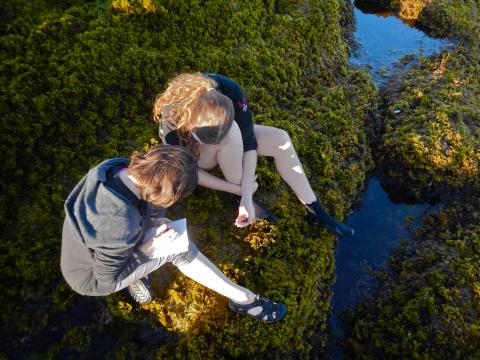
Expand your statistical knowledge and resume by learning R. Use project-based learning to explore marine mammal populations, intertidal systems, and fisheries while learning statistical skills and R. In this course students will learn to become proficient in R (data manipulation, graphing, hypothesis testing, importing and cleaning data) and learn to effectively communicate statistical results.
Learning Outcomes
- Understand and implement best practices for data management
- Use R statistical software for basic data cleaning and statistics
- Use R markdown to build reproducible workflows and documents
- Load, clean, and plot simple spatial data in R
Registration is CLOSED. Please check back in the fall for next summer.
Course Numbers
Cornell: BIOSM 2350 (3 Credits)
UNH: MEFB 633 (4 Credits)
Faculty
Dr. Easton White
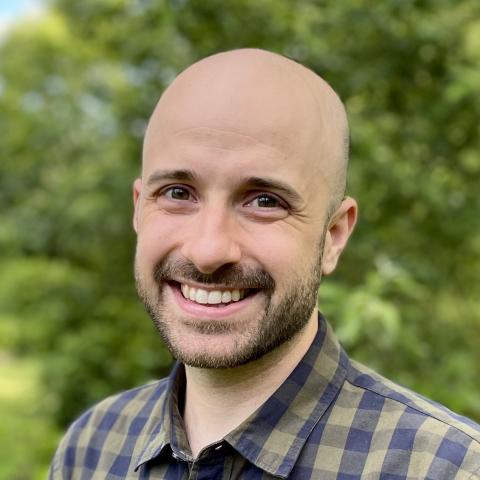
Dr. Easton White is a quantitative marine ecologist who uses mathematical and statistical tools, coupled with experiments and field observations, to answer questions in ecology, conservation science, sustainability, and ecosystem management. Most of his work is focused on marine systems, especially fisheries and spatial planning. Easton currently conducts research on assessing the effectiveness of protected area networks, improving species monitoring programs, and modeling socio-ecological systems in the context of fisheries. His work centers on how environmental variability, in particular rare events (e.g., hurricanes, COVID-19 pandemic), affects ecosystems and those that depend on them.
Faith Frings
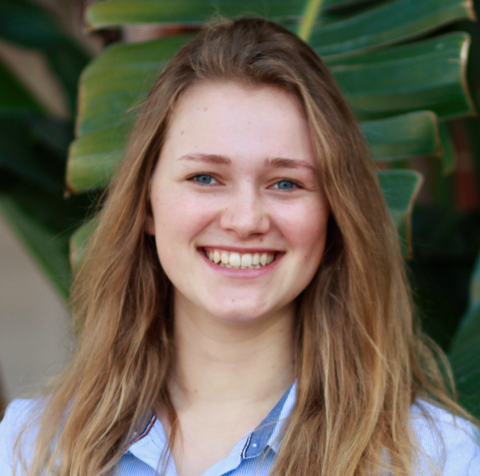
Faith Frings is a PhD candidate in the Department of Biological Sciences at the University of New Hampshire, where she studies undergraduate motivation and engagement in learning statistical programming in the life sciences.
Dr. Jannine Chamorro
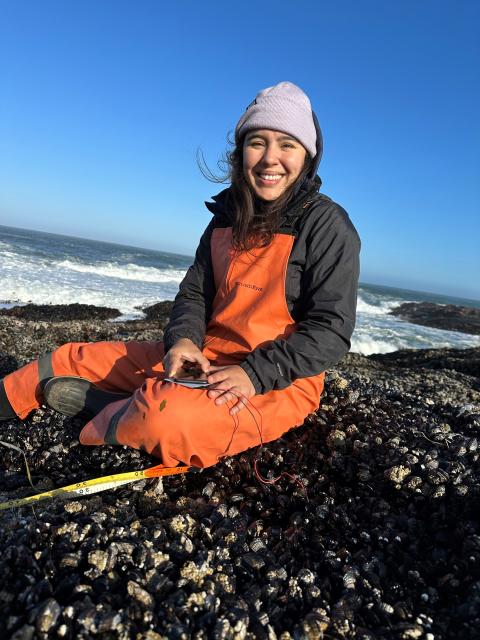
Dr. Jannine Chamorro is a postdoctoral researcher in the Quantitative Marine Ecology Lab at the University of New Hampshire. She is an ecophysiologist who uses experimental and quantitative methods to investigate how marine invertebrates respond to environmental variability within and across generations. Her current research examines how early-life environmental exposure in eastern oysters (Crassostrea virginica) influences resilience later in life.